How it works
From a news event to a lead a person can act on. Cheap checks run first, and nothing unsourced can be saved.
News event
A leadership change appears in the news.
Cheap triage
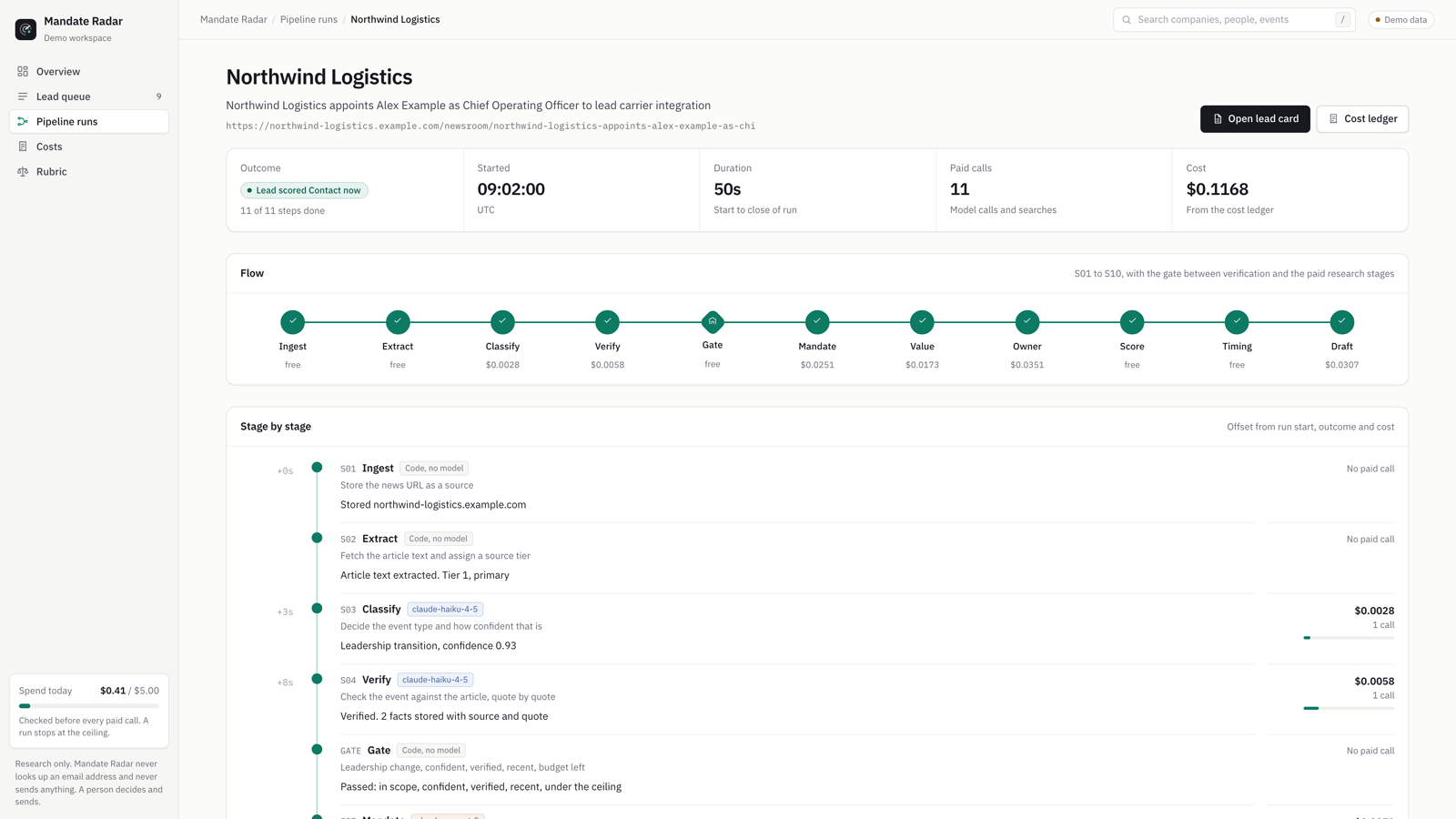
A low-cost model classifies it. A gate stops the run unless it's a recent, real change and the daily budget allows it.
Research
The stronger model researches the company and the new leader, only for events that pass.
Evidence, sourced
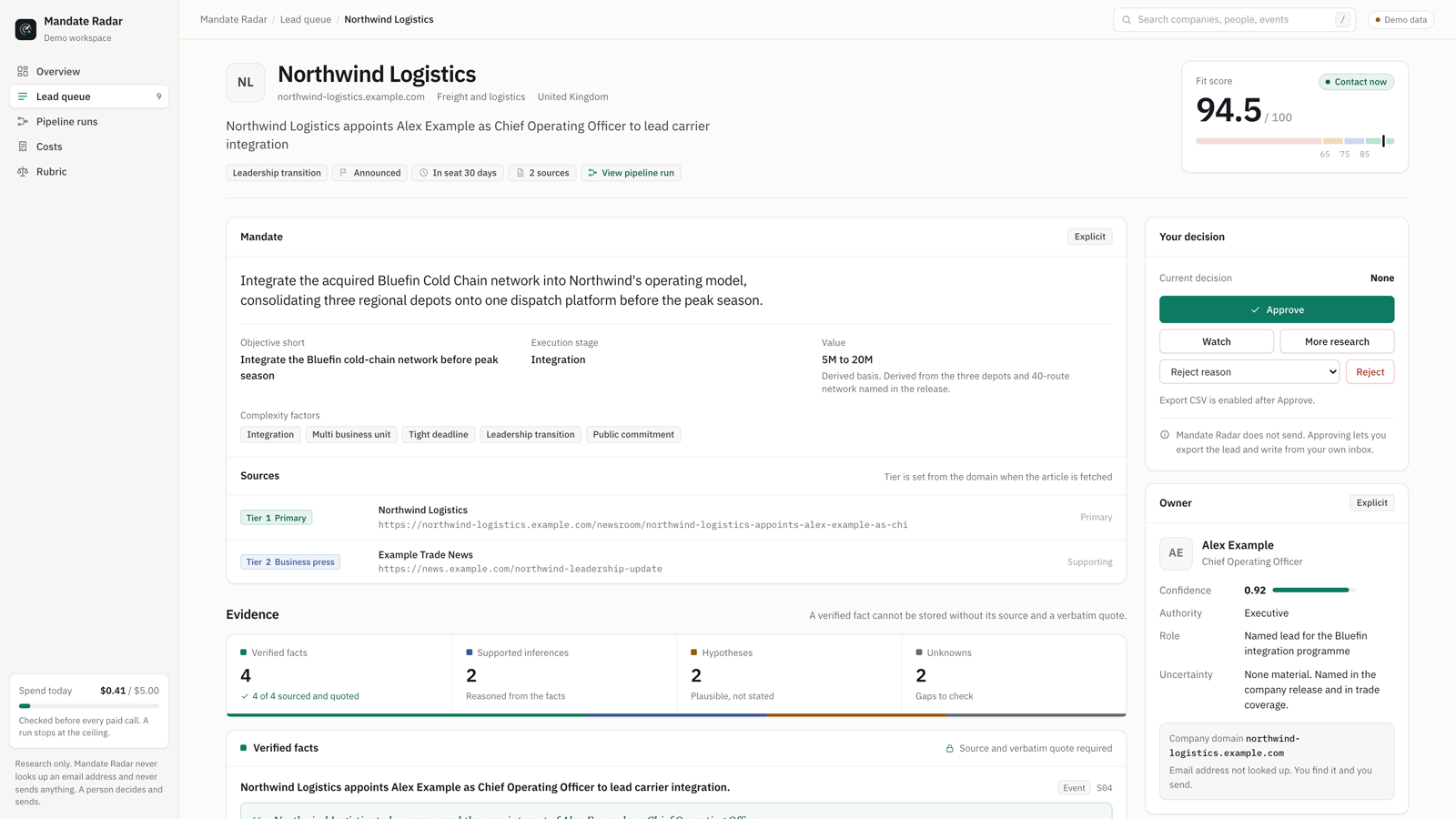
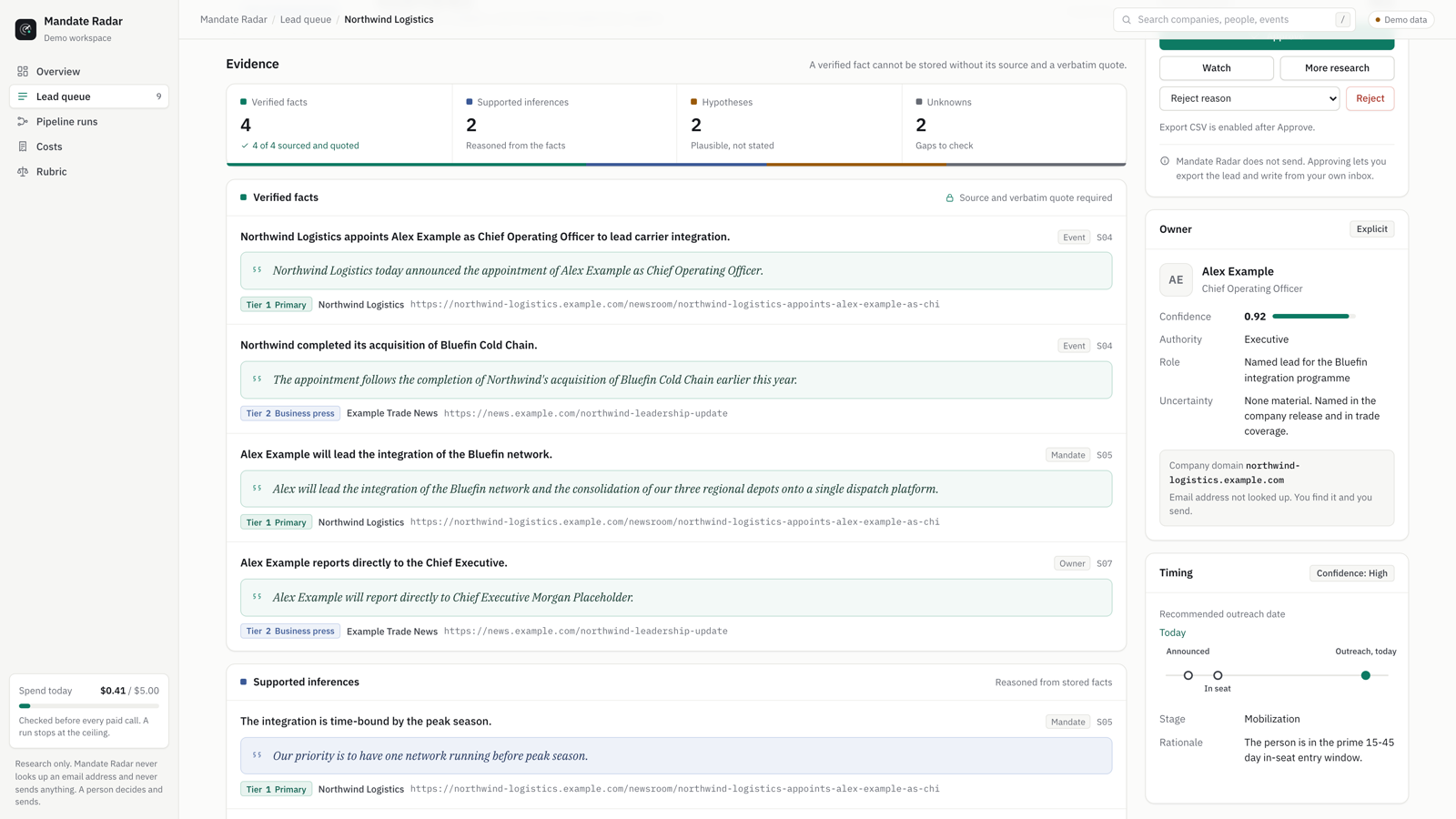
Every verified fact must carry its source and a verbatim quote, or the database refuses to save it.
Score
Code ranks the lead on a fixed rubric with hard caps. No named owner means it can't rank above "watch".
Draft
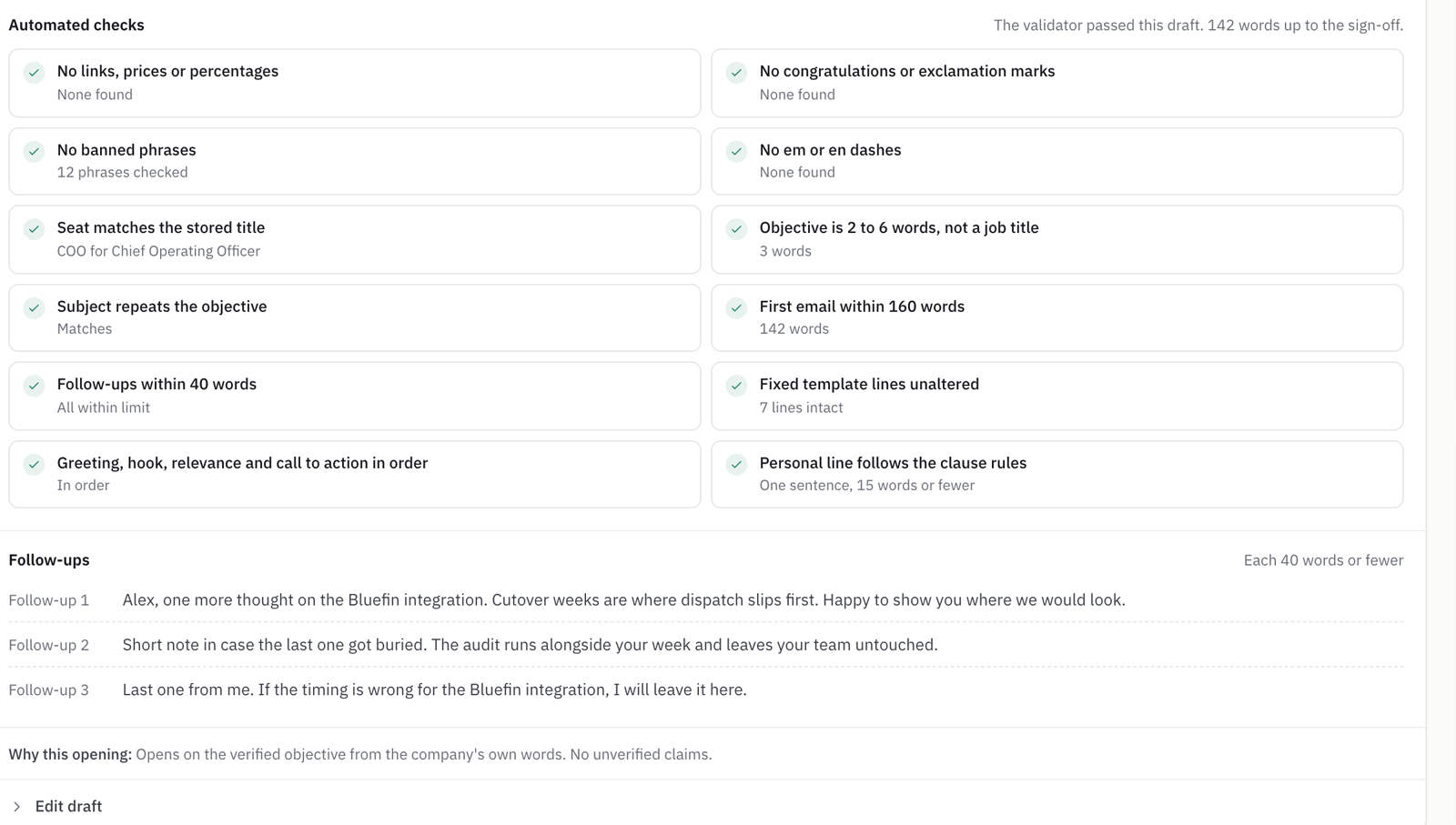
The model fills slots in a fixed template; code assembles the email and checks it against written rules.
A person sends
The pipeline never looks up addresses and never sends anything.
A person decides
The outcome
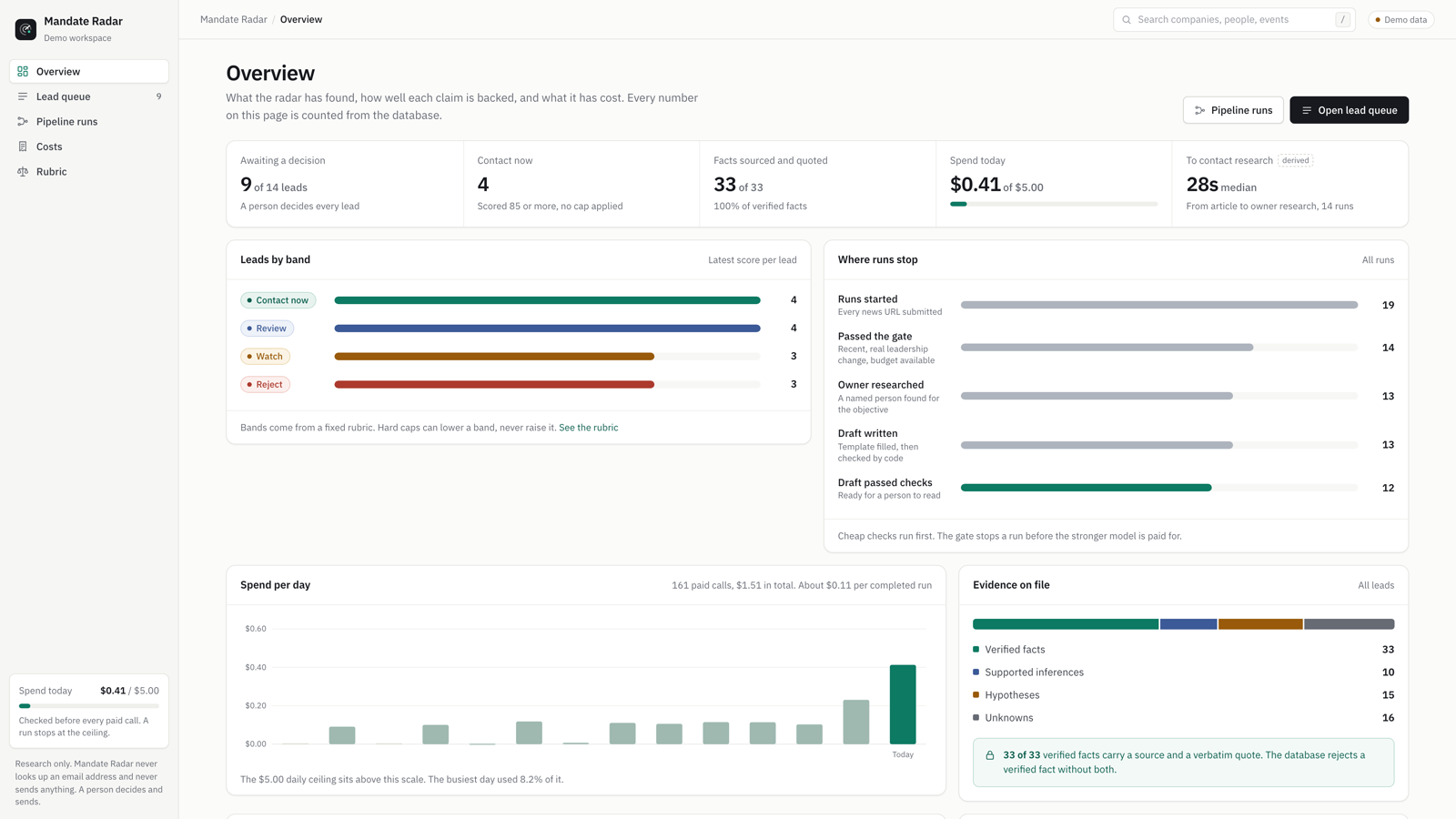
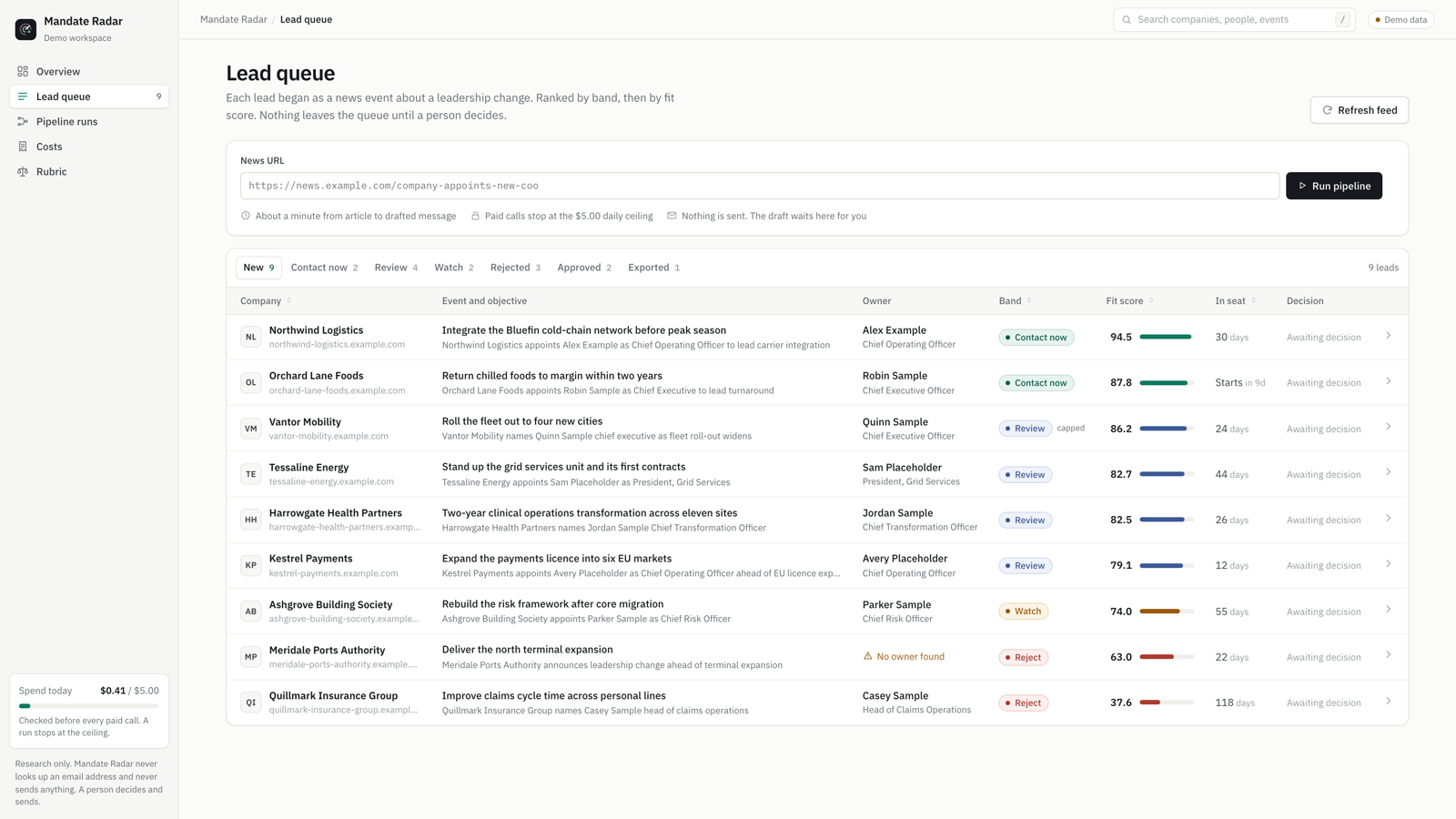
Paste in a news link about a leadership change, and the pipeline returns a ranked sales lead with its evidence, a researched contact and a draft first message. It reaches contact research in under a minute (median), at about USD 0.11 a run. All 290 of the 290 facts it has stored carry a source and a verbatim quote.
The problem
Outbound sales to newly appointed senior leaders depends on timing and accuracy. A new leader is most open to outside help early in the role, so leads have to be found fast. And one wrong fact in the first line of a cold email loses the reader, so a lead with an invented fact is worse than no lead at all.
What I decided
- No invented facts. A verified fact must carry its source and a verbatim quote, or it can't be saved.
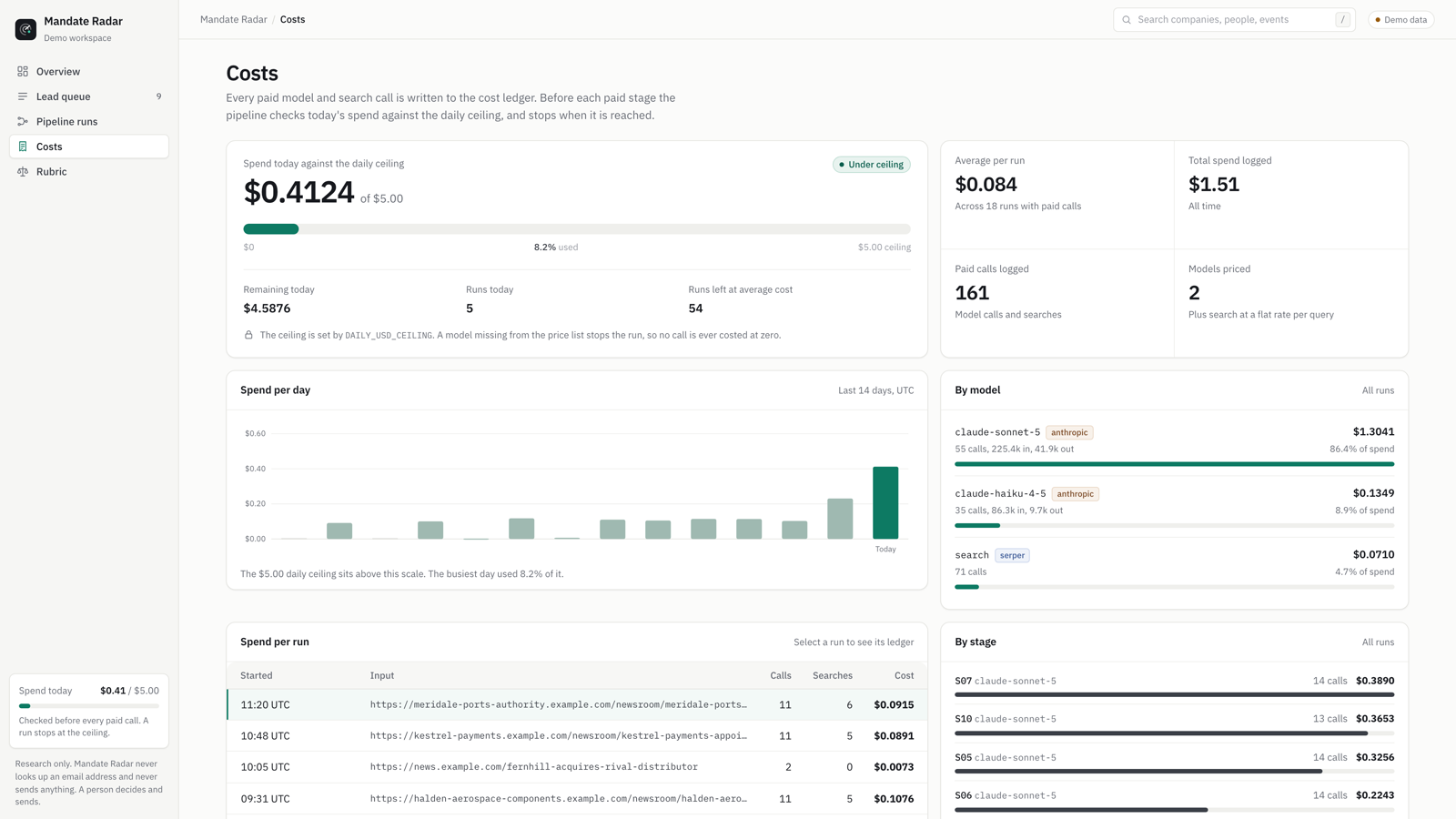
- Spending stops at a hard daily ceiling, checked before every paid AI call.
- The model drafts and the code decides. Ranking follows a fixed scoring rubric, and every draft is checked against written rules before a person sees it.
- A person sends. The pipeline never looks up email addresses and never sends anything.
How it was built
The agents drafted a written spec from these rules and built the pipeline stage by stage. I reviewed and tested each stage before signing it off.
- Cheap checks run first. A low-cost model (Haiku) classifies each news event, and a gate stops the run unless it's a recent, real leadership change and the budget allows it. The stronger model (Sonnet) only runs on leads that pass.
- The fact rule is enforced twice: by a database rule that rejects any "verified fact" without a source and quote, and by a check in the code that covers every other way of saving data. Evidence is labelled as verified fact, supported inference, hypothesis or unknown, and the lead card shows each group separately.
- Every paid call is logged with its cost. A model missing from the price list stops the run, so nothing is ever costed at zero.
- Scoring has hard caps. A lead without a named owner can't rank above "watch", however good the rest looks.
- The model fills slots in a fixed email template, and code assembles the email and checks it.
Results
- 290 of 290 stored facts are sourced and quoted. All 7 attempts to insert an unsourced fact, through raw database commands and through the code, were rejected.
- About USD 0.11 per completed run: USD 3.29 across 278 paid calls.
- Under one minute (median) from news event to contact research.
- 273 automated tests, with the paid APIs replaced by stand-ins, run in about 31 seconds. The draft checker caught 20 of 20 planted errors.
Screens from the build